
 Home
HomeTrack vs Trackless Electric Telescopic Gate Installation for Industrial Sites
 Jan 03,2026
 684
684
 Yuchen
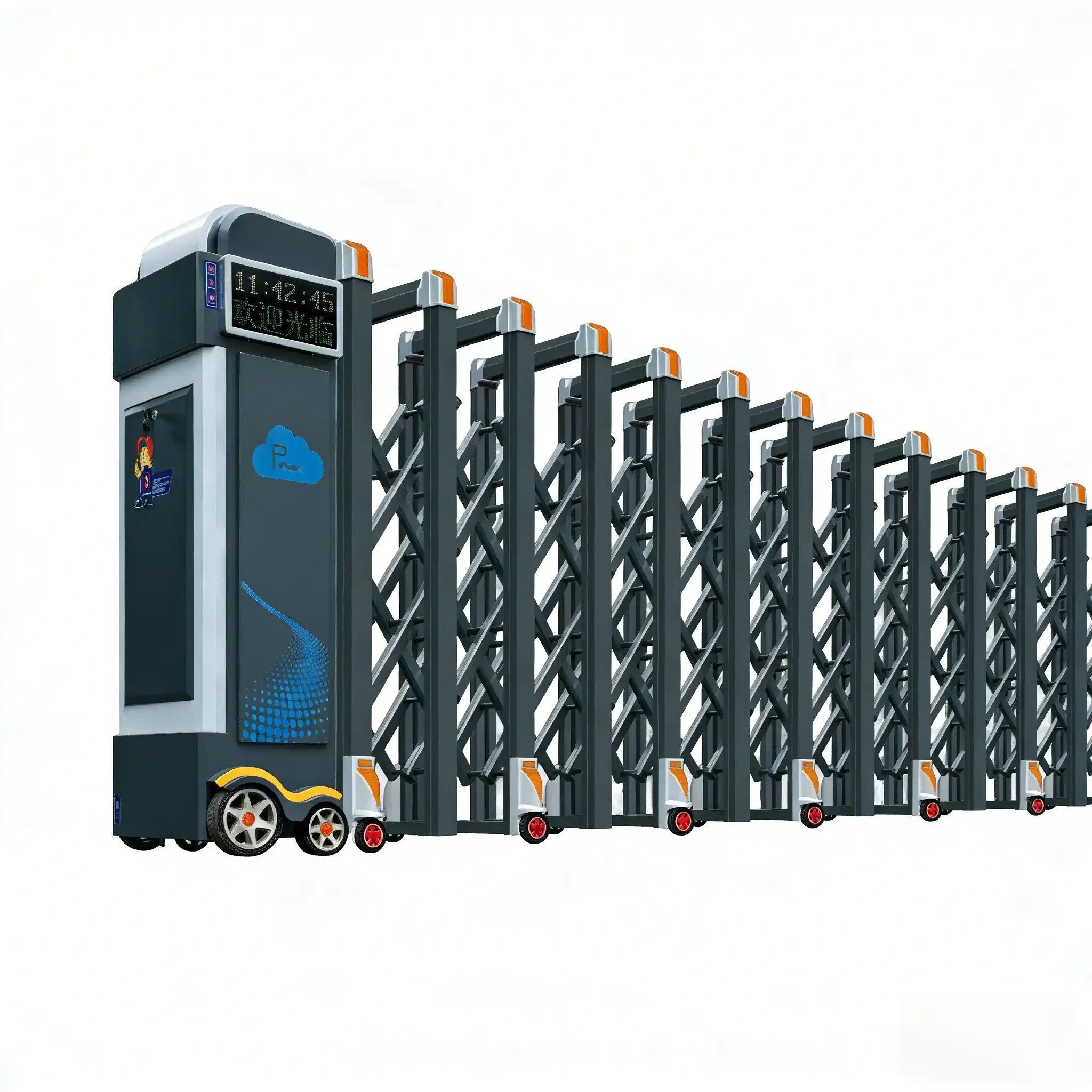
Electric telescopic gates are widely adopted in industrial facilities, business parks, logistics centers, and educational campuses due to their space-saving design and automated access control. During project planning, one of the most common technical decisions buyers face is whether to choose a track-based or trackless electric telescopic gate.
Understanding the installation differences between these two systems is essential for ensuring stable operation, safety, and long-term reliability. This article provides a practical comparison of track vs trackless electric telescopic gate installation, covering application scenarios, technical parameters, installation requirements, and selection recommendations for overseas buyers and distributors.
1. Overview of Track and Trackless Electric Telescopic Gates
Before comparing installation details, it is important to understand how each system operates.
Track Electric Telescopic Gate
A track electric telescopic gate operates along a fixed ground track installed on a concrete foundation. The gate wheels run inside or on top of the track, guiding movement and bearing most of the gate’s weight.
Trackless Electric Telescopic Gate
A trackless electric telescopic gate uses magnetic guidance, internal sensors, or precision wheels instead of a fixed ground track. The gate moves freely along the ground while maintaining alignment through electronic or mechanical guidance systems.
Both designs are widely used, but their installation methods and site requirements differ significantly.
2. Application Scenarios and Use Cases
2.1 Track Electric Telescopic Gate Applications
Track systems are commonly selected for:
-
Large factories with heavy vehicle traffic
-
Industrial parks with wide entrances
-
Logistics centers requiring long gate spans
-
High-wind or uneven ground environments
Because the track provides physical guidance, this system offers higher stability under demanding conditions.
2.2 Trackless Electric Telescopic Gate Applications
Trackless systems are often used in:
-
Schools and educational campuses
-
Commercial buildings and office parks
-
Sites with aesthetic or cleanliness requirements
-
Locations where ground cutting is not permitted
Trackless gates are favored where installation speed, visual appearance, and ease of maintenance are priorities.
3. Installation Requirements: Track vs Trackless
3.1 Ground and Foundation Preparation
Track Electric Telescopic Gate Installation
-
Requires precise concrete foundation construction
-
Typical foundation depth: 150–200 mm
-
Track alignment tolerance must be minimal
-
Drainage design is critical to prevent debris accumulation
Improper track leveling is one of the most common causes of operational issues.
Trackless Electric Telescopic Gate Installation
-
Requires a flat, reinforced concrete surface
-
Higher requirements for surface smoothness
-
No embedded rail installation
-
Magnetic strips or positioning markers may be required
Although trackless systems avoid rail installation, they demand higher precision in ground flatness.
3.2 Installation Complexity and Time
-
Track systems usually require longer installation time due to foundation work and track alignment.
-
Trackless systems can be installed more quickly once the concrete surface is ready.
However, faster installation does not always mean lower technical requirements, especially for long gate lengths.
4. Technical Parameters Affecting Installation
4.1 Gate Length and Weight
-
Track gates are better suited for long spans (often exceeding 10–12 meters).
-
Trackless gates typically perform best with medium-length configurations.
As gate length increases, motor torque and structural reinforcement become more critical.
4.2 Motor Power and Drive System
Motor selection is closely related to installation type:
-
Track systems distribute load through the rail, allowing smoother operation with lower resistance.
-
Trackless systems rely more heavily on motor control precision and wheel friction.
Typical motor power ranges from 370W to 750W, depending on gate size and usage frequency.
4.3 Control and Safety Systems
Both systems can support:
-
Remote controls
-
Access cards or RFID
-
License plate recognition systems
-
Emergency manual release
For public environments such as schools and campuses, safety sensors and automatic stop functions are essential regardless of installation type.
5. Environmental Factors to Consider During Installation
5.1 Climate and Weather Conditions
-
Track systems may be affected by dust, sand, snow, or ice accumulation.
-
Trackless systems perform better in environments where ground cleanliness can be maintained.
In coastal or humid regions, corrosion-resistant materials and sealed electrical components are recommended.
5.2 Wind Load and Outdoor Exposure
-
Track electric telescopic gates provide higher resistance to strong winds.
-
Trackless systems may require additional structural reinforcement in open areas.
Wind conditions should be evaluated during site assessment to avoid long-term operational issues.
6. Maintenance Implications After Installation
6.1 Track System Maintenance
-
Regular cleaning of tracks
-
Inspection for debris or deformation
-
Periodic lubrication
Neglecting track maintenance can lead to noise, vibration, or motor overload.
6.2 Trackless System Maintenance
-
Fewer mechanical components on the ground
-
Focus on sensor calibration and wheel condition
-
Periodic checking of guidance accuracy
From a maintenance perspective, trackless systems generally require less daily attention.
7. Cost Considerations Related to Installation
Installation costs vary based on:
-
Foundation construction
-
Labor time
-
Site preparation complexity
-
Electrical wiring distance
Track systems may involve higher civil construction costs, while trackless systems may require higher precision components.
Total project cost should be evaluated over the entire service life rather than initial installation alone.
8. How to Choose Between Track and Trackless Electric Telescopic Gates
When making a selection, buyers should evaluate the following factors:
8.1 Usage Frequency
-
High-frequency industrial use favors track systems
-
Moderate-frequency institutional use favors trackless systems
8.2 Site Conditions
-
Uneven or windy environments benefit from track-based designs
-
Clean, flat sites are suitable for trackless installation
8.3 Aesthetic and Operational Preferences
-
Trackless gates provide a cleaner visual appearance
-
Track systems prioritize stability over appearance
8.4 Long-Term Maintenance Strategy
-
Availability of maintenance personnel
-
Environmental cleanliness
-
Spare parts accessibility
9. Common Installation Mistakes to Avoid
-
Inadequate foundation depth for track systems
-
Poor surface leveling for trackless systems
-
Incorrect motor power selection
-
Insufficient drainage planning
-
Ignoring local electrical and safety regulations
Proper site evaluation before installation can prevent most long-term problems.
10. Conclusion
Both track and trackless electric telescopic gates have proven effective across industrial, commercial, and institutional environments. The key to successful electric telescopic gate installation lies in matching the system type to actual site conditions, usage frequency, and maintenance capabilities.
Understanding the installation differences between track and trackless systems helps buyers and distributors make informed decisions, reduce operational risks, and ensure stable performance over the product’s lifespan.
For projects requiring technical drawings, installation guidance, or customized configurations, consulting an experienced electric telescopic gate manufacturer can support proper planning and system selection.
 stainless-steel-expandable-road-barriers-traffic-control-trends
 You May Also Like


 Tel
Tel
 Email
Email
 Address
Building A, Block 7, Liandong U Valley Nansha Park, Danzao Town (Jinsha), Nanhai District, Foshan City, Guangdong Province [Yuchen Technology]